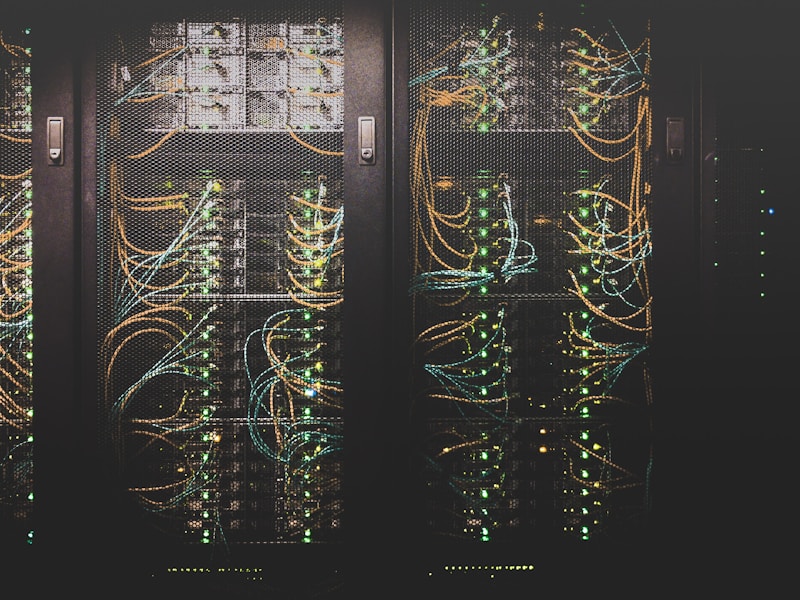
Artificial intelligence has rapidly evolved into a field that demands specialized computational infrastructure. From the early days of CPUs to modern distributed multi-accelerator systems, understanding compute hardware is essential for developers, researchers, and organizations working with machine learning.
This expanded guide provides a deeply researched, up‑to‑date overview of the AI hardware ecosystem, covering CPUs, GPUs, TPUs, FPGAs, accelerators, memory systems, networking, thermal considerations, and deployment strategies.
The Evolution of AI Hardware
Traditional CPUs — General‑Purpose but Limited for AI
CPUs were the foundation of early machine-learning systems. Their strengths include:
- Optimized for sequential and branching operations
- Strong single-threaded performance
- Excellent for data preprocessing, control logic, and orchestration
- Wide availability and mature software ecosystem
However, CPUs struggle with deep learning workloads because:
- Limited parallelism → most CPUs offer 4–64 cores
- Lower FLOPS compared to modern accelerators
- Increasing model sizes outpaced CPU scaling
Best suited for:
- Model serving for small models
- ETL pipelines
- Inference with quantized lightweight architectures
GPUs — The Workhorses of Modern AI
GPUs unlocked the deep learning boom.
Key Strengths
- Thousands of parallel cores → ideal for tensor operations
- High memory bandwidth → up to 3 TB/s on H100
- Large VRAM → 80 GB+ on enterprise cards
- CUDA & cuDNN ecosystems → foundational for PyTorch & TensorFlow
Common GPU Types
| Category | Examples | Use Case | |---------|----------|----------| | Consumer GPUs | RTX 4090, 4080 | Local training, prototyping | | Data Center GPUs | A100, H100, MI300X | Large-scale training | | Edge GPUs | Jetson series | On-device inference |
Example: Multi-GPU PyTorch Setup
import torch
if torch.cuda.device_count() > 1:
    model = torch.nn.DataParallel(model)
model.to("cuda")
Specialized AI Chips
TPUs — Tensor Processing Units
Google’s TPUs are optimized for large matrix operations and deep learning.
Strengths
- Extremely fast matrix multipliers (MXUs)
- Unified memory architecture
- Seamless TensorFlow integration
- TPUv5p scales across hundreds of chips
TPU Initialization
import tensorflow as tf
resolver = tf.distribute.cluster_resolver.TPUClusterResolver()
tf.config.experimental_connect_to_cluster(resolver)
tf.tpu.experimental.initialize_tpu_system(resolver)
strategy = tf.distribute.TPUStrategy(resolver)
FPGAs — Customizable AI Hardware
FPGAs allow developers to define their own compute pipelines.
Benefits
- Reprogrammable hardware logic
- Deterministic low-latency inference
- Energy efficient
- Ideal for financial ML, medical devices, and autonomous systems
Challenges
- Steeper learning curve
- Limited high‑level frameworks
AI Accelerators — ASIC‑Based Solutions
Several companies now produce domain‑specific accelerators:
Examples
- NVIDIA Grace Hopper (CPU‑GPU Superchip)
- AWS Inferentia2 (optimized for large-scale inference)
- Cerebras Wafer-Scale Engine (largest chip ever built)
- Intel Gaudi2 (cost-effective LLM training)
Distributed AI Computing
Modern AI now requires clusters of accelerators.
Multi‑GPU & Multi‑Node Training
Frameworks enabling this:
- PyTorch Distributed
- DeepSpeed
- Megatron-LM
- Ray Train
- Horovod
Example: PyTorch Distributed Initialization
import torch.distributed as dist
dist.init_process_group("nccl")
High‑Speed Interconnects
Training large models requires ultra‑fast networking.
Important Technologies
- NVLink / NVSwitch → GPU‑to‑GPU communication
- InfiniBand → low‑latency cluster networking
- PCIe Gen5 / CXL → memory expansion and accelerator scaling
Without high-speed links, training efficiency drops drastically.
Memory Architecture in AI Systems
AI performance is often memory‑bound, not compute‑bound.
Memory Hierarchy
| Level | Speed | Capacity | Example | |-------|--------|-----------|---------| | On‑chip SRAM | Highest | Small | TPU/FPGA caches | | HBM3/3e | Very High | Moderate | GPU VRAM | | DDR5 RAM | Medium | High | System Memory | | NVMe | Low | Very High | Dataset storage |
Memory Optimization Techniques
import torch

torch.backends.cuda.enable_flash_sdp(True)
model.gradient_checkpointing_enable()

from torch.cuda.amp import autocast, GradScaler
scaler = GradScaler()
with autocast():
    out = model(inp)
Model Optimization Techniques for Hardware Efficiency
Quantization
Lowering precision while maintaining accuracy:
| Prec | Use Case | |------|----------| | FP32 | Training | | FP16 | Mixed precision | | BF16 | Large scale training | | INT8 | Inference | | INT4 / INT2 | LLM inference optimization |
Tools: bitsandbytes, TensorRT, ONNX Runtime
Pruning
Removes unneeded weights → decreases memory & compute.
Types:
- Unstructured
- Structured
- Dynamic pruning
Knowledge Distillation
Train a smaller “student” model from a large “teacher.”
Improves:
- Latency
- Model size
- Energy efficiency
Hardware for Different AI Use Cases
Training Large Models
The best options:
- NVIDIA H100/H200
- AMD MI300X
- TPUv5p
- Distributed clusters via:
- Azure ND H100 v5 VMs
- AWS p5 instances
Inference at Scale
For large-scale inference:
- AWS Inferentia2
- NVIDIA L40S
- Groq LPU — blazing‑fast token generation
- AMD MI210
Edge AI
Examples:
- Jetson AGX Orin
- Google Coral Edge TPU
- Mobile NPUs (Apple ANE, Qualcomm Hexagon DSP)
Use cases:
- Drones
- Robotics
- Offline voice assistants
- Cameras with live detection
Thermal & Power Considerations
AI hardware consumes massive energy, especially GPUs.
Data Center Constraints
- Liquid cooling for clusters
- Power delivery limits
- Redundant networking
- Hot aisle/cold aisle layout
Efficiency becomes critical as models scale.
The Future of AI Computing
Neuromorphic Computing
Chips that mimic neuron behavior offer:
- Extremely low power
- Parallel event-driven computation
- Use cases: robotics, sensory AI
Optical AI Chips
Use photons instead of electrons:
- Faster operations
- Lower heat generation
Chiplet Architectures
Breaking monolithic GPUs into modular chiplets:
- Better yields
- Higher scalability
- Lower cost
Conclusion
AI computing has entered a new era of specialized, distributed, and energy‑aware architecture. From CPUs to GPUs to next‑generation AI accelerators, the hardware landscape is evolving rapidly. Mastering these systems ensures you can build, train, and deploy AI models efficiently and cost‑effectively.